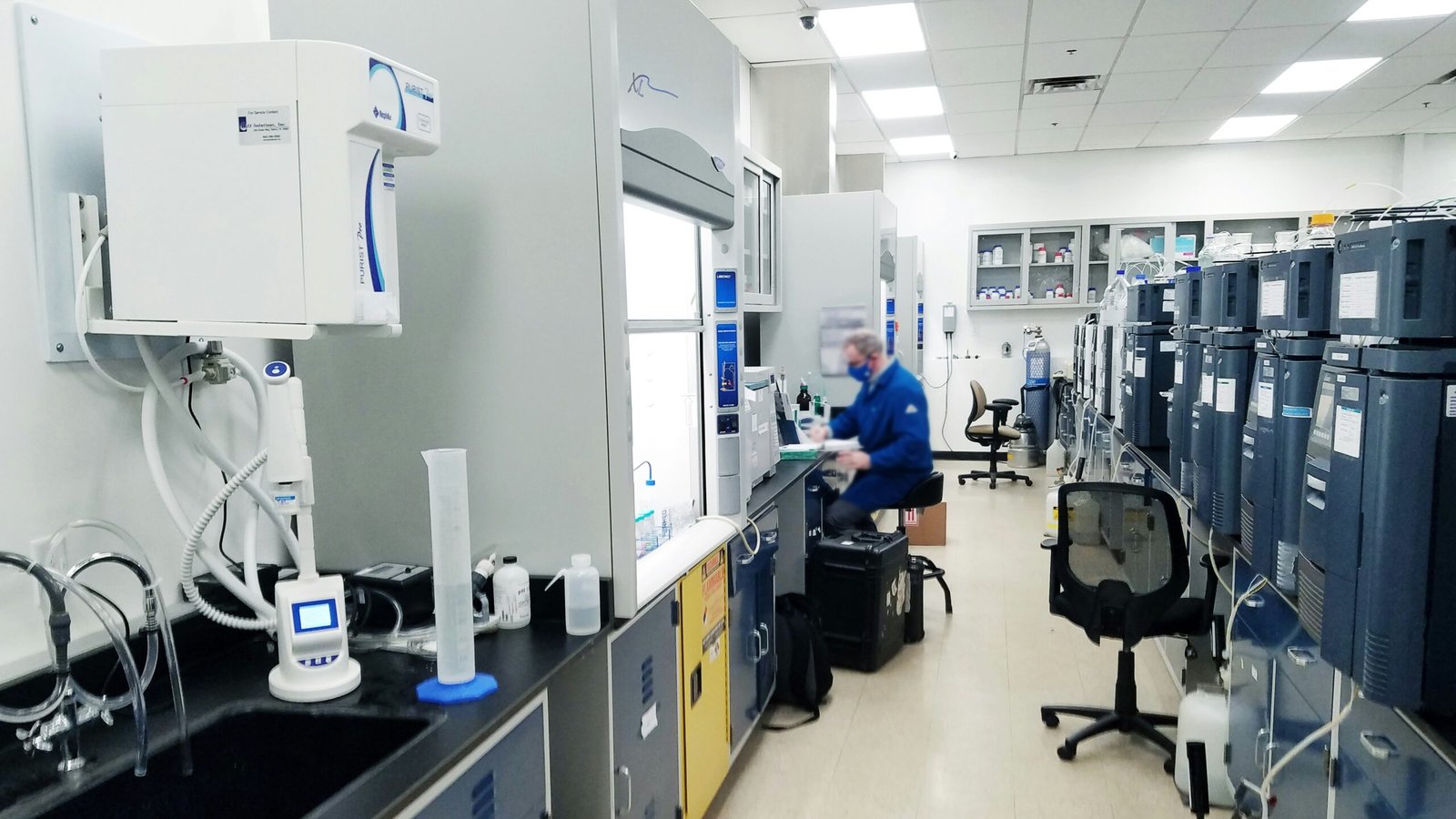
automated cell counter
In modern biological and medical research, accurate cell counting is a fundamental requirement. From basic cell culture maintenance to advanced applications in biotechnology, pharmaceuticals, and clinical diagnostics, the ability to determine cell concentration, viability, and size directly influences experimental outcomes. Traditionally, researchers relied on manual techniques such as hemocytometers, which are time-consuming, operator-dependent, and prone to variability. The introduction of the automated cell counter has revolutionized cell analysis by providing fast, precise, and reproducible results, making it an indispensable tool in contemporary laboratories.
Understanding Automated Cell Counters
An automated cell counter is an analytical instrument designed to quantify cells in a liquid sample with minimal human intervention. Unlike manual methods, which require visual inspection under a microscope, automated systems use advanced technologies such as image analysis, electrical impedance, or flow-based detection to count cells accurately and consistently.
These instruments are capable of measuring not only total cell count but also additional parameters such as cell viability, cell size distribution, and in some cases, morphological characteristics. As a result, automated cell counters provide a more comprehensive picture of a cell population, supporting better decision-making in both research and clinical settings.
Limitations of Manual Cell Counting
Before the widespread adoption of automated cell counters, manual counting with a hemocytometer was the standard approach. While this method remains useful for small-scale or educational purposes, it presents several limitations. Manual counting is labor-intensive and highly dependent on the skill and concentration of the operator. Fatigue, subjective judgment, and inconsistent sampling often lead to significant variability between measurements.
Furthermore, manual methods are inefficient for high-throughput environments where multiple samples must be analyzed rapidly. As research timelines become more demanding and regulatory standards more stringent, the need for a faster and more reliable alternative has become increasingly evident. Automated cell counters address these challenges by standardizing the counting process and reducing human error.
Key Technologies Behind Automated Cell Counters
Automated cell counters employ a range of technologies, each offering distinct advantages depending on the application.
Image-Based Cell Counting
Image-based automated cell counters capture digital images of cells using a built-in camera and analyze them with sophisticated software algorithms. These systems can distinguish live and dead cells using dyes such as trypan blue and provide visual confirmation of results. Image-based counters are particularly popular in research laboratories because they combine accuracy with ease of use and require minimal sample preparation.
Electrical Impedance Technology
Electrical impedance-based cell counters measure changes in electrical resistance as cells pass through a small aperture. Each cell displaces electrolyte solution, producing a measurable signal proportional to cell size. This technology is well-established and offers rapid and reliable counting, especially for uniform cell populations.
Flow-Based and Fluorescence Methods
More advanced automated cell counters incorporate flow-based analysis and fluorescence detection. These systems can identify specific cell types, analyze multiple parameters simultaneously, and support complex assays. While typically more expensive, they are invaluable in applications requiring high sensitivity and detailed cell characterization.
Advantages of Using an Automated Cell Counter
The growing adoption of automated cell counters is driven by several key advantages that enhance laboratory efficiency and data quality.
Improved Accuracy and Reproducibility
Automated cell counters eliminate subjective interpretation, ensuring consistent results across experiments and operators. This reproducibility is critical for longitudinal studies, quality control, and regulatory compliance.
Time Efficiency and High Throughput
What once took several minutes per sample can now be completed in seconds. Automated cell counters significantly reduce hands-on time, enabling researchers to process more samples in less time and focus on higher-value analytical tasks.
Reduced Operator Dependency
By standardizing the counting process, automated systems minimize variability caused by differences in user experience or technique. This is particularly beneficial in shared laboratory environments or clinical facilities where multiple users operate the same equipment.
Data Management and Integration
Many automated cell counters offer digital data storage, export options, and compatibility with laboratory information management systems (LIMS). This facilitates data tracking, analysis, and reporting, which are essential in regulated environments.
Applications of Automated Cell Counters
Automated cell counters are widely used across multiple fields, reflecting their versatility and reliability.
Cell Culture and Biotechnology
In cell culture laboratories, accurate cell counting is essential for seeding experiments, monitoring growth, and ensuring consistency between batches. Automated cell counters support reproducible cell expansion, which is critical in biopharmaceutical production and tissue engineering.
Pharmaceutical Research and Drug Development
During drug discovery and development, cell-based assays are used to evaluate compound efficacy and toxicity. Automated cell counters enable rapid assessment of cell proliferation and viability, improving screening efficiency and data reliability.
Clinical and Diagnostic Laboratories
In clinical settings, automated cell counters contribute to diagnostic workflows by providing precise cell counts for research and validation purposes. Their ability to deliver standardized results supports improved patient outcomes and compliance with clinical guidelines.
Academic and Educational Institutions
Universities and research institutions use automated cell counters to train students and conduct experiments efficiently. These instruments allow learners to focus on data interpretation rather than manual counting techniques, enhancing educational outcomes.
Choosing the Right Automated Cell Counter
Selecting an appropriate automated cell counter depends on several factors, including application requirements, sample type, and budget constraints. Laboratories should consider parameters such as counting accuracy, supported cell size range, viability analysis capabilities, and ease of maintenance.
For routine cell culture work, a compact image-based automated cell counter may be sufficient. For more complex analyses involving heterogeneous populations or fluorescent markers, advanced systems with multi-parameter detection may be more appropriate. Evaluating long-term costs, including consumables and software updates, is also an important consideration.
Challenges and Considerations
Despite their many advantages, automated cell counters are not without limitations. Some systems require proprietary consumables, which can increase operational costs. Certain instruments may also struggle with samples containing debris, clumps, or highly variable cell sizes.
Proper sample preparation remains critical to achieving accurate results. Users must ensure cells are evenly suspended and free from aggregates. Regular calibration and maintenance are also essential to preserve instrument performance over time.
Future Trends in Automated Cell Counting
The future of automated cell counters is closely linked to advances in artificial intelligence, machine learning, and microfluidics. Emerging systems are expected to offer enhanced image recognition, improved discrimination between cell types, and deeper insights into cell morphology and behavior.
Integration with automated laboratory workflows and robotics is another key trend. As laboratories move toward full automation, automated cell counters will play a central role in streamlining processes and enabling large-scale, data-driven research.
Additionally, miniaturization and portability are expanding access to automated cell counting technology, making it available in resource-limited settings and point-of-care applications.
Conclusion
The automated cell counter has become a cornerstone of modern cell analysis, offering unmatched accuracy, efficiency, and reproducibility compared to traditional manual methods. By reducing human error, increasing throughput, and providing rich analytical data, automated cell counters empower researchers and clinicians to achieve more reliable and meaningful results. As technology continues to evolve, these instruments will become even more sophisticated, supporting increasingly complex applications across biotechnology, pharmaceuticals, and clinical research. For laboratories seeking to improve productivity and data quality, investing in an automated cell counter is not merely a convenience but a strategic necessity.
About the Author